

There are plenty of fighting game players who are extremely competitive and still wouldn’t describe themselves as competitors.
Ranked makes that obvious. People will spend hours trying to move up, get frustrated when they lose, run into something they don’t understand, and end up in training mode trying to figure out what happened. If they see that same person again later, of course they want to beat them this time.
Then you ask whether they compete and sometimes the answer is, “Nah, I just play ranked.”
Well, you’re already competing. What you may not be interested in is everything that normally gets packaged around organized fighting game competition.
I’m not saying time is the only reason people don’t compete, and I don’t think there’s one answer that applies to everybody. This is one of the biggest issues I’ve had with tournament competition personally, and it’s one of the things I wanted to address with The Tower.
That distinction has been on my mind for a long time.
Around 20 years ago, me and Swoozie used to talk about fighting games and competition. He enjoyed playing against people and obviously wanted to win, but that didn’t automatically mean he wanted to spend his weekends going to tournaments.
My path went completely the other way. Competition became a huge part of my life. EVO, majors, traveling, championships, all of that ended up being part of what I did for more than two decades.
There’s another side of my background that matters here too.
Before most people knew me as a competitor, I started in the scene as one of the original online tournament organizers for Dead or Alive 2 Ultimate. This was back when getting everybody together could mean going through the Xbox Live dashboard just to communicate before we even got into the matches.
Eventually I moved into running offline events as well, both locally and outside my city. Me and Tom also worked together on DOATEC and other Dead or Alive tournaments during that period.
So when I talk about how tournaments use people’s time, this isn’t coming only from somebody who got tired of sitting around in brackets. I’ve had to organize these events too.
When the Broadcast Starts Running the Competition
One of my biggest problems with modern tournament structure is how much time can get added that isn’t actually necessary for the competition itself.
Say an online tournament starts at 8 PM. Everybody knows they need to be ready at 8. Fine.
The frustrating part comes after that. You finish a match and could be ready for the next one, except something is being held for stream. Maybe production wants a particular matchup, somebody needs to wait for the broadcast, commentary is filling time, or the event is trying to keep a full show moving.
I understand the incentive behind it. Tournament channels are still streams, and the people producing them want an entertaining broadcast. They want viewers to stay, commentators need something to talk about, clips come out of it, and a good production helps build whatever they’re doing.
None of that is strange to me. I make content too.
What bothers me is when the competitors end up paying for that production with their time.
If two people are available and could have finished their match half an hour ago, why are they still sitting there because the broadcast needs them later?
When I was organizing online tournaments with much worse tools than people have today, the priority was getting the matches played and keeping things moving. That part still makes sense to me.
The broadcast should serve the competition. The competition shouldn’t have to wait around for the broadcast.
There’s a viewer side to this too.
Loving fighting games doesn’t mean I want to spend 12 hours watching one tournament. I can care about the matches, want to know who wins, and be especially interested once we reach the people who have a real chance of taking the whole thing.
Giving my entire Saturday to the broadcast is a different question.
A casual player can feel the same way. Somebody might love fighting games, watch certain players, buy the games, play every night, and still have absolutely no interest in sitting in front of an event all day.
Competitors have their own version of the same problem. Work exists. Families exist. Relationships, hobbies, responsibilities, and everything else in somebody’s life don’t disappear because a bracket starts at 8.
Even without any of that, maybe they simply don’t want to reserve six hours for something where they spend 45 minutes actually playing.
Sometimes the barrier isn’t fear.
Sometimes it’s just:
“Dude, I don’t have all day.”
I think that’s a reasonable answer.
Ranked Already Fits Around People’s Lives
Ranked has a huge advantage here because it works around your schedule instead of asking you to build your schedule around it.
If I only have an hour, I can play for an hour. Another day I might have three hours available and stay on much longer. Something comes up halfway through? I get off and come back whenever I have time again.
It doesn’t matter whether that happens in the morning, afternoon, late at night, or somewhere in between. You log in and play whoever else is available at that moment.
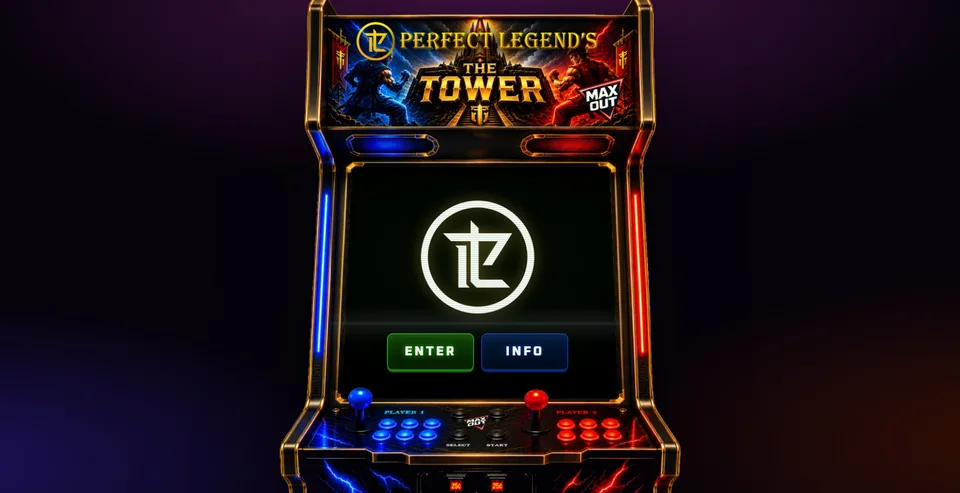
That convenience is something I wanted to keep when I developed The Tower, launching September 14 on MaxOut.
I brought the concept to MaxOut. They had the technology to make it possible, and they built a dedicated part of their platform around what I wanted to do.
Enter The Tower:
https://www.maxout.pro/e/tower
The simplest way to explain the idea is:
We took the convenience of ranked and turned it into a competitive format with stakes.
At the foundation is a ladder, but everything built around that climb is The Tower.
There’s no entry fee, and you aren’t required to show up at one particular hour just because the competition starts then. Get on when it works for you, find whoever else is active, play your matches, and keep climbing.
Now those matches are connected to something larger than whatever rank the game normally gives you. Money is involved, Bosses are waiting farther up, and the climb eventually leads somewhere.
Make it far enough and you can reach me.
I’m always the Final Boss.
The Main Broadcast Doesn’t Need Every Match
A format like this naturally brings up a question.
If everybody is playing throughout the day instead of waiting for one official broadcast, how are people supposed to see the matches?
My answer is simple: stream them.
Anybody climbing The Tower who wants to go live should do it. Let people follow where you are, see who you’re fighting, watch you move up the ladder, and experience whatever story develops around your run.
A match doesn’t need to appear on the main channel for it to exist as content.
In some ways, I prefer that. Players get to build something around their own climb instead of everybody waiting for one official stream to decide which matches matter.
The centralized broadcast comes in when the competition reaches the part that makes sense to showcase together.
Once we hit Top 8, now we have a reason to gather everybody around the official show. The same goes for the Boss fights, because those are major moments in the structure people have been climbing toward.
Before that, let people play.
When we reach the part worth making a show out of, then make the show.
I’m Not Trying to Save the FGC
Every few days there seems to be another conversation about saving the FGC, fixing the FGC, growing the FGC, why the FGC is dying, or whatever else people are arguing about that week.
That isn’t really what I’m doing with The Tower.
My goal isn’t to convert everybody into a traditional tournament player. I’m also not interested in talking people out of locals, majors, or regular online brackets. Other people on MaxOut are building their own competitions too, and that’s fine.
Different formats can exist at the same time.
What I’m offering is another one.
Gaming already has more than enough people logging onto Twitter to explain why they hate the game they keep playing, why everything is terrible, or why everybody else is doing something wrong.
At some point my response becomes:
All right. Here’s something else to do.
I had an idea I thought could be fun, brought it to MaxOut, and we built it. Now people can actually get in there and decide for themselves whether they enjoy it.
That interests me a lot more than spending all day complaining.
Positivity doesn’t require pretending everything is perfect either. You can criticize something and still decide that the more useful response is to build an alternative.
That’s what I chose to do.
The Tower Is a Seasonal Series
I also don’t want people thinking of The Tower as one weekly bracket that repeats forever.
Each month is a season.
There are weekly components inside that structure, but the season itself runs across the month. A new season can also mean a different fighting game, which keeps The Tower from being tied permanently to one title.
We’re starting with Marvel Tokon.
What comes afterward can be something completely different.
Bosses can change from season to season. So can the game and whatever stories develop around the climb.
There is one constant.
I’m always the Final Boss.
No matter which game that season is built around, somebody who makes it far enough knows where the climb eventually leads.
New season. New game. New climb. Same Final Boss.
The Tower Launches September 14
The first season of The Tower launches on MaxOut September 14 with Marvel Tokon.
Enter The Tower:
https://www.maxout.pro/e/tower
Entry is free, and the ladder is available around the clock so people can play when it fits their schedule. If you want everybody following your run, stream it. See who you run into, see how far you climb, and find out whether you can reach the Bosses.
And apparently everybody is Master Rank in Marvel Tokon now anyway, because every time I open Twitter somebody else has posted another screenshot.
Cool.
I better see y’all in The Tower.